 Skip to content
TL;DR:
- Expert floor assessments measure moisture, wear, flatness, and load capacity to prevent costly failures. These evaluations provide data-driven reports that identify issues early and support legal or insurance claims. Regular assessments help extend floor life and maintain safety by catching problems before they become serious.
Expert floor assessment is a diagnostic process that measures moisture content, surface wear, structural flatness, and load-bearing capacity to guide maintenance decisions and prevent costly failures. Think of it like a full checkup for your floors. Just as you would not skip a doctor’s visit because you feel fine, skipping a professional flooring evaluation can leave hidden problems growing quietly beneath the surface. The role of expert floor assessment goes far beyond a quick visual scan. It gives you a clear, data-driven picture of exactly what your floors need, so you spend money on the right repairs rather than guessing.
What does an expert floor assessment involve?
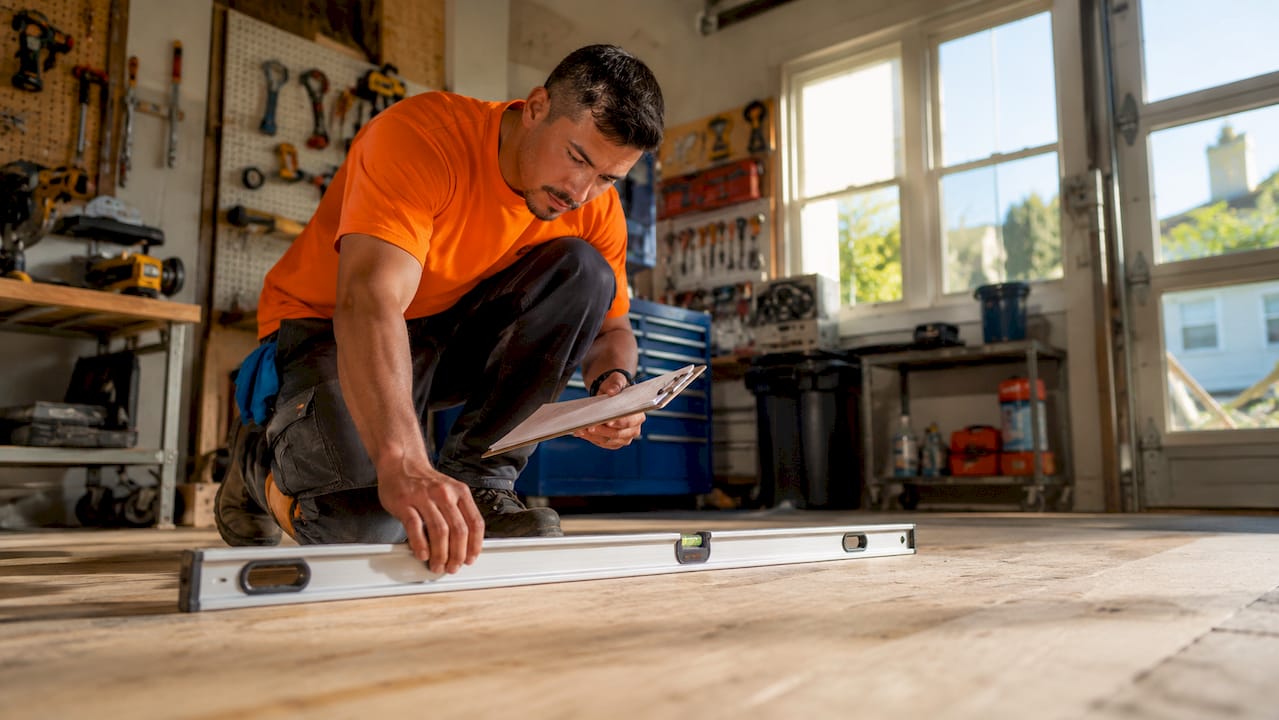
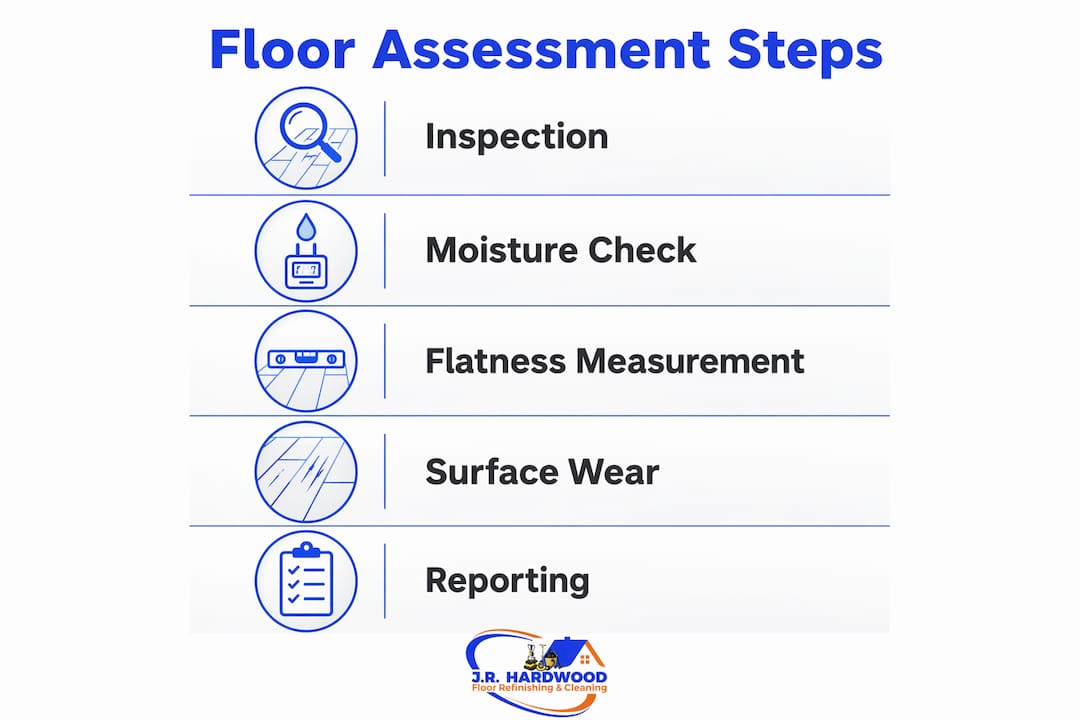
A professional floor evaluation follows a structured process. It is not just someone walking around and eyeballing your floors. Expert floor assessments measure moisture, surface wear, flatness to ASTM standards, and load-bearing capacity, then produce documented reports you can use for maintenance decisions or disputes. Each of those measurements tells a different story about your floor’s health.
Here is what a thorough professional flooring assessment covers:
- Visual inspection: The expert examines finish condition, surface scratches, staining, and signs of cupping or warping across the full floor area.
- Moisture measurement: Specialized meters read moisture content in the wood and subfloor. High moisture is the leading hidden cause of hardwood failure.
- Surface wear and finish evaluation: The inspector grades how much of the protective finish remains and whether the wood fiber itself is damaged.
- Structural flatness testing: Floor flatness testing is critical not just for aesthetics but for operational safety and longevity, especially in commercial spaces with heavy equipment.
- Slip resistance measurement: A tribometer measures the coefficient of friction on the floor surface, producing objective safety data.
- Documentation and reporting: The expert compiles findings into a written report with measurements, photos, and specific recommendations.
One detail most homeowners miss is the difference between surface issues and structural damage. Professional assessments distinguish between surface finish wear and structural damage, directing appropriate maintenance and avoiding unnecessary treatments. That distinction alone can save you thousands of dollars.
Pro Tip: Never rely on a visual inspection alone to assess moisture. Wood can look perfectly fine while holding moisture levels high enough to cause cupping or adhesive failure within months.
Why hire flooring experts instead of doing it yourself?
The gap between professional and DIY results is real and measurable. Professional installations maintain a 95% satisfaction rate versus 85% for DIY projects, despite higher upfront costs. That 10-point gap represents floors that buckle, gap, or delaminate within a year or two.
| Factor | Expert assessment | DIY assessment |
|---|---|---|
| Moisture detection | Calibrated meters, subfloor readings | Visual check only |
| Flatness measurement | ASTM-standard equipment | Eyeball or basic level |
| Slip resistance | Tribometer data | Not typically measured |
| Documentation | Formal written report | None |
| Legal defensibility | Court-admissible findings | Not accepted |
| Cost of mistakes | Caught early, low cost | Often discovered after failure |
The cost of a professional structural assessment runs $10 to $25 per square foot and reveals underlying issues like moisture rot before catastrophic failure occurs. Compare that to the cost of replacing a full floor after a hidden problem goes undetected for two years.
The importance of floor assessment also shows up in legal and insurance situations. Independent inspectors without commercial ties produce credible findings that hold up in arbitration or litigation, avoiding conflicts of interest. An inspector who also sells flooring products has a built-in reason to recommend more work than you need.
Pro Tip: When hiring a flooring inspector, ask directly whether they have any commercial affiliation with flooring manufacturers or contractors. A truly independent expert has none.
How do expert assessments prevent flooring failures and extend floor life?
Many flooring failures are predictable and preventable. Flooring failures often result from ignored issues like rushing construction schedules, which leads to installation on improperly cured concrete. An expert catches those conditions before installation begins or before a small problem becomes a full replacement.
“A professional floor assessment is diagnostic. It focuses on identifying exact maintenance needs rather than selling unnecessary services, helping homeowners save money and extend floor life.” — ProFresh Floor Care
The benefits of expert floor evaluations stack up quickly when you look at the full picture:
- Safety: Slip resistance data from tribometer testing identifies hazardous surfaces before someone gets hurt.
- Durability: Catching moisture problems early prevents rot, cupping, and adhesive failure that shorten floor life dramatically.
- Appearance: Knowing exactly how much finish remains tells you whether a screen and recoat will restore the floor or whether sanding is required.
- Cost savings: Targeted repairs based on assessment findings cost far less than premature full restoration or replacement.
- Warranty protection: Many flooring warranties require documented proof of proper installation conditions. An assessment provides that proof.
Before any hardwood floor installation, a proper assessment of subfloor moisture and flatness is not optional. It is the difference between a floor that lasts 30 years and one that starts failing in year three.
How do expert floor assessments support dispute resolution?
When a floor fails and the cause is disputed, the difference between a flooring forensic expert and a general contractor matters enormously. A general contractor gives an opinion. A flooring forensic expert gives evidence.
- Use of ASTM standards: Licensed flooring forensic consultants rely on peer-reviewed science and ASTM standards to produce defensible, objective conclusions rather than anecdotal evidence.
- Tribometer data: Tribometer measurements of coefficient of friction provide objective, court-defensible evidence for floor safety assessments, outperforming subjective testimony.
- Documented chain of evidence: Photos, moisture readings, flatness measurements, and written reports create a timeline that supports or refutes claims about installation errors or environmental damage.
- Independent standing: Experts affiliated with IFTI (the International Flooring Training Institute) and similar organizations carry credibility that a contractor’s word cannot match.
- Scope of disputes: Common cases include moisture damage blamed on the homeowner versus the installer, adhesive failures, and slip-and-fall liability claims.
The key insight here is that flooring forensic experts replace anecdotal claims with scientifically defensible reports rooted in standards. That is what makes their findings credible in court, in insurance claims, and in contractor disputes. If you are a property manager overseeing multiple units, having documented floor condition reports before and after tenancy is one of the smartest protections you can put in place.
Key Takeaways
Expert floor assessment is the most reliable way to protect your flooring investment, prevent hidden failures, and produce documentation that holds up in any dispute.
| Point | Details |
|---|---|
| Assessment covers more than looks | Experts measure moisture, flatness, wear, and slip resistance using calibrated tools. |
| Professional results outperform DIY | Professional installations reach 95% satisfaction versus 85% for DIY projects. |
| Early detection saves money | Catching moisture rot or adhesive failure early costs far less than full floor replacement. |
| Independence matters | Inspectors with no commercial ties produce findings that hold up in legal and insurance disputes. |
| Documentation protects you | Written reports with measurements protect warranties, support claims, and guide targeted repairs. |
What I have learned after years of assessing floors in Colorado homes
After working on floors across Denver, Parker, Castle Rock, and Boulder, I can tell you the most common mistake homeowners make is treating a floor assessment as an unnecessary expense. They call us after the problem is obvious. By then, the moisture has been sitting under the wood for months, the subfloor is compromised, and what could have been a $400 screen and recoat has turned into a full sand and refinish or worse.
The second mistake I see constantly is trusting a visual check. Floors that look fine can be holding moisture levels that guarantee failure within a year. I have walked into homes where the hardwood looked beautiful and the moisture meter told a completely different story.
My honest advice: choose an independent certified inspector who has no financial stake in what they recommend. Then treat their report like a roadmap. Not every floor needs aggressive treatment. Sometimes the assessment tells you the floor is in great shape and just needs a clean and buff. That is money saved, not money spent.
The homeowners and property managers who get the best long-term results are the ones who schedule assessments proactively, not reactively. Think of it as putting sunscreen on your floors before the damage happens.
— J.R.
How Jrhardwoodfloorrefinishingandcleaning approaches floor care in Denver
If you are ready to get a clear picture of your floor’s condition, Jrhardwoodfloorrefinishingandcleaning is here to help. We serve homeowners and property managers across the Denver Metro Area, from Parker and Castle Rock to Boulder and Colorado Springs, with expert guidance tailored to each floor’s specific condition.
We offer free over-the-phone quotes based on verbal descriptions and photos, so you get honest direction before committing to any service. Whether your floors need a simple clean and buff or a full sand and refinish, our team uses eco-friendly products and proven methods to protect your investment. Not sure whether to refinish yourself or hire a pro? Our detailed DIY vs. professional comparison walks you through exactly what each path involves, so you can make a confident decision. Reach out today and let us take a look.
FAQ
What is an expert floor assessment?
An expert floor assessment is a structured diagnostic evaluation that measures moisture content, surface wear, structural flatness, and slip resistance using calibrated tools and ASTM standards. It produces a documented report that guides maintenance decisions and can support legal or insurance claims.
Why hire flooring experts instead of inspecting floors yourself?
Professional inspectors use specialized equipment like moisture meters and tribometers that detect hidden problems invisible to the naked eye. DIY inspections miss subfloor moisture and structural issues that cause premature floor failure.
How much does a professional floor assessment cost?
Professional structural and damage assessments typically cost $10 to $25 per square foot, depending on scope and location. That cost is far lower than the expense of replacing a floor damaged by an undetected problem.
Can a floor assessment help with insurance or legal disputes?
Yes. Independent flooring forensic experts produce reports based on ASTM standards and peer-reviewed methods that are accepted in arbitration and litigation. Tribometer data and moisture readings provide objective evidence that subjective testimony cannot match.
How often should homeowners schedule a professional floor evaluation?
For residential hardwood floors in normal use, a professional evaluation every three to five years is a reasonable baseline. High-traffic commercial floors or properties in humid climates benefit from more frequent assessments.