 Skip to content
TL;DR:
- Hardwood floor longevity depends on wood species, climate, maintenance, and refinishing timing.
- Colorado’s dry climate causes wood shrinking and gapping, requiring humidity control and protection.
- Regular cleaning, humidity management, and timely refinishing extend the lifespan of hardwood floors.
Most homeowners assume hardwood floors are built to last no matter where you live. The truth is, longevity depends on a mix of factors that vary significantly from home to home and state to state. Colorado throws some extra curveballs into the mix, from its notoriously dry air to intense UV exposure at altitude. Whether you have brand-new oak planks or decades-old maple floors that need some love, understanding what actually drives hardwood longevity puts you in the driver’s seat. This guide walks you through everything, from wood species and climate to maintenance habits and refinishing timing, so you can make smart, confident decisions about your floors.
Table of Contents
- Understanding natural wood characteristics and their impact
- Environmental and climate factors unique to Colorado
- Best maintenance practices to extend hardwood lifespan
- Restoration and refinishing: When and how it protects your hardwood investment
- Why longevity is about prevention, not just repair
- Colorado hardwood floors deserve expert care and restoration
- Frequently asked questions
Key Takeaways
| Point | Details |
|---|---|
| Wood species matters | The natural hardness and grain of your chosen hardwood has a major impact on how long it lasts. |
| Climate shapes performance | Colorado’s low humidity and sun exposure require special maintenance for long-term floor health. |
| Routine care pays off | Regular cleaning, humidity control, and timely recoating greatly extend your floor’s lifespan. |
| Refinishing renews value | Periodic restoration is essential to protect your hardwood investment for decades. |
| Prevention saves money | Proactive care always costs less than major repair or replacement in the long run. |
Understanding natural wood characteristics and their impact
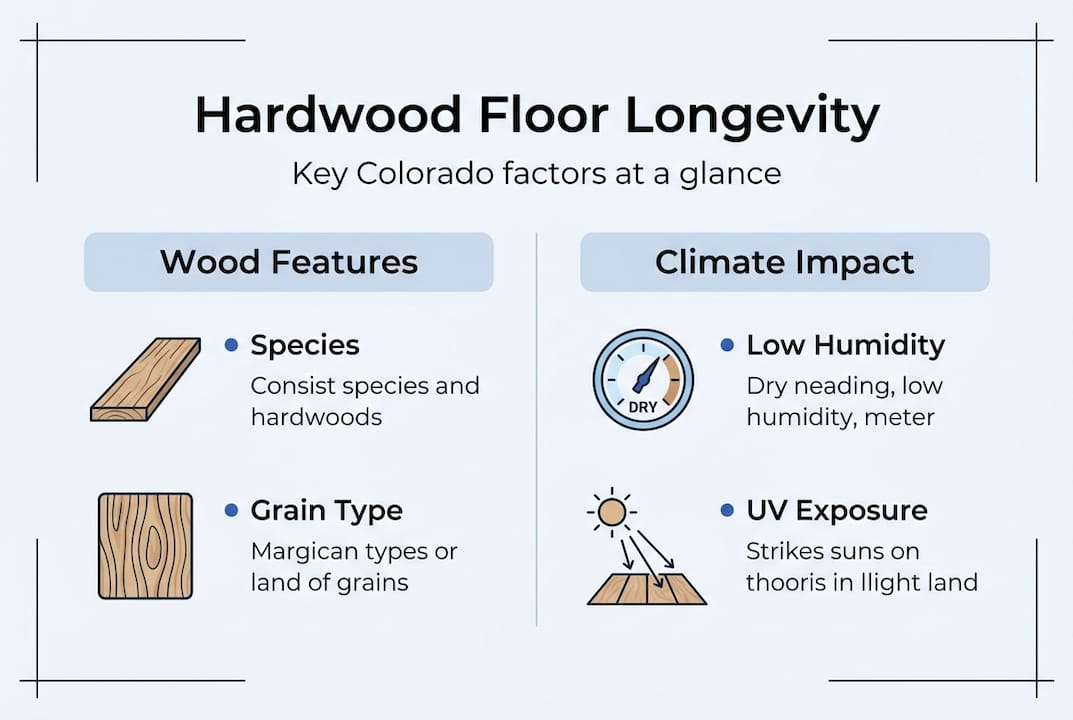
Before your floors ever meet a Colorado winter, their durability is already being shaped by one key factor: the wood itself. Not all hardwood is created equal, and the species you choose (or already have) sets the baseline for how long your floors will last.
The Janka hardness scale is the industry’s go-to tool for measuring how resistant a wood species is to dents and wear. The higher the number, the tougher the wood. Here’s a quick comparison of popular species:
| Wood species | Janka hardness rating | Best use case |
|---|---|---|
| Hickory | 1,820 | High-traffic areas |
| Hard maple | 1,450 | Active family homes |
| White oak | 1,360 | Versatile, great all-around |
| Red oak | 1,290 | Classic choice, widely available |
| Cherry | 950 | Low-traffic, formal spaces |
| Pine | 870 | Rustic charm, needs extra care |
As different wood species vary in hardness, affecting overall floor durability, choosing the right species for your lifestyle matters more than most people realize. A cherry floor in a busy kitchen with kids and dogs is going to show wear fast. Hickory in that same space? It will hold up beautifully for decades.
Beyond hardness, grain pattern plays a big role. Tight, straight grain tends to be more stable and resistant to moisture-related movement. Wide, open grain can be gorgeous but may show wear and dents more quickly. Plank thickness also matters because thicker planks can be sanded and refinished more times over their lifetime, which directly connects to extending hardwood lifespan over the long haul.
- Engineered vs. solid hardwood: Solid wood can be refinished many more times, but engineered hardwood handles humidity fluctuations better.
- Pre-finished vs. site-finished: Site-finished floors often have a stronger, more seamless protective coat.
- Plank width: Wider planks are more prone to expansion and contraction in dry climates.
- Cut type: Quarter-sawn wood is more dimensionally stable than flat-sawn.
Pro Tip: If you are shopping for new floors in Colorado, prioritize species with a Janka rating above 1,200. That sweet spot gives you both durability and a wide range of style options.
The bottom line here is simple. The wood you start with shapes every maintenance and restoration decision you will make down the road. Start strong, and you give yourself a real advantage.
Environmental and climate factors unique to Colorado
Once you understand the wood basics, it is time to look at what Colorado itself does to your floors. And honestly, our state is not easy on hardwood. That is not a reason to avoid it. It just means you need to know the rules of the game.
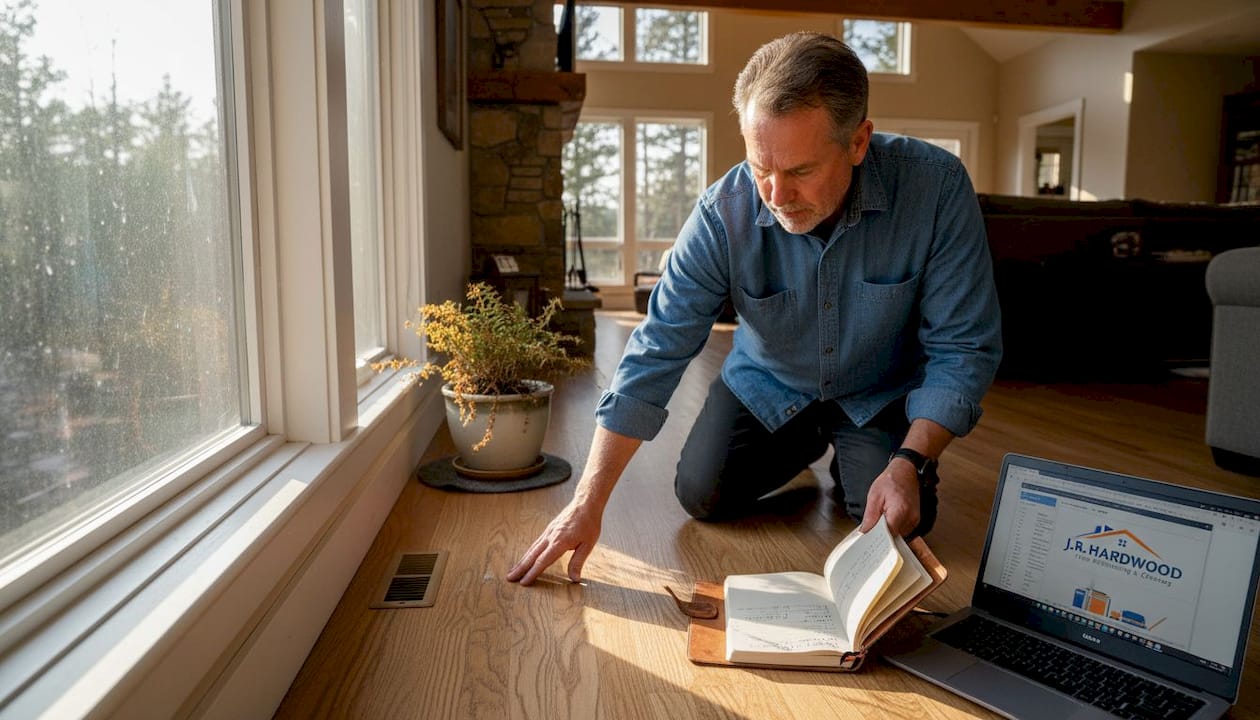
Colorado’s average relative humidity often sits between 20% and 40%, well below the 45% to 55% range that hardwood floors prefer. Dry climates like Colorado’s can cause wood to shrink and gap as moisture leaves the fibers. You may notice small cracks between planks in winter. That is your floor responding to the dry air, not necessarily a sign of damage.
Altitude adds another layer. At 5,000 to 10,000 feet above sea level, UV rays are significantly stronger, which means sun-exposed floors can fade and discolor faster than floors in lower-elevation states. South-facing rooms with large windows are especially vulnerable.
Here is how Colorado stacks up against more humid states:
| Factor | Colorado | Humid states (e.g., Florida, Louisiana) |
|---|---|---|
| Average humidity | 20 to 40% | 60 to 80% |
| Main floor risk | Shrinkage, gapping | Cupping, swelling, mold |
| UV exposure | Very high (altitude) | Moderate |
| Seasonal swings | Extreme | Mild to moderate |
| Humidifier needed? | Yes, especially in winter | Rarely |
The good news is that Colorado’s dry climate actually reduces the risk of cupping (when planks bow upward from excess moisture) and mold growth under the floor. You are trading one set of problems for another, and the dry-climate problems are generally easier to manage.
Practical steps you can take right now:
- Run a whole-home humidifier during winter months to keep indoor humidity between 40% and 50%.
- Use UV-blocking window film or curtains in sun-heavy rooms.
- Check for seasonal gaps in spring. Most will close naturally as humidity rises.
- Follow floor care best practices tailored to Colorado conditions.
Pro Tip: A simple digital hygrometer (a small device that measures indoor humidity) costs under $20 and can save you thousands in floor repairs. Keep one in your main living area and check it weekly during heating season.
Reviewing your hardwood maintenance checklist with Colorado’s climate in mind is one of the smartest things you can do as a local homeowner. Knowing what to watch for in wood floors in dry climates helps you stay ahead of problems before they become costly repairs.
Best maintenance practices to extend hardwood lifespan
Now that you know how Colorado affects your floors, let’s talk about what you can actually do about it. Good maintenance is like putting sunscreen on your floors. It protects what’s underneath and keeps things looking great for much longer.
Routine cleaning and periodic recoating are proven to extend hardwood floor life significantly. Here is a simple, effective routine:
- Daily: Sweep or dust mop to remove grit and debris. Sand particles are like tiny sandpaper underfoot and scratch your finish faster than almost anything else.
- Weekly: Damp mop with a hardwood-safe cleaner. Wring the mop almost completely dry. Standing water is your floor’s enemy.
- Monthly: Inspect for scratches, dull spots, or areas where the finish looks thin. Catching these early saves you from bigger repairs later.
- Seasonally (fall and spring): Check humidity levels and adjust your humidifier settings. Look for gaps or cupping and note any changes.
- Every 3 to 5 years: Schedule a professional screen and recoat to refresh the protective finish without full sanding.
“The floors that last 50 or 60 years in Colorado homes are almost always the ones where someone paid attention to the small stuff consistently. It is never one big thing. It is a hundred small habits done right.”
What to avoid:
- Steam mops (they force moisture into wood and can warp planks)
- Vinegar or ammonia-based cleaners (they strip the finish over time)
- Rubber-backed rugs left in place for too long (they trap moisture and can discolor the floor)
- Dragging furniture without felt pads
For more detail on protecting your investment, our guide on how to prevent hardwood floor damage covers Colorado-specific mistakes we see all the time. You can also check out our full hardwood maintenance guide and hardwood cleaning best practices for a deeper look.
Pro Tip: Place a quality doormat at every exterior entry point. Studies show that most indoor floor damage starts with dirt and grit tracked in from outside. A good mat stops the problem before it starts. You can also explore more tips at hardwood floor maintenance resources online.
Restoration and refinishing: When and how it protects your hardwood investment
Maintenance can go a long way, but at some point your floors will need more than a cleaning. Refinishing is like hitting the reset button on your floors. It removes years of wear, scratches, and dullness, and gives the wood a fresh, protective coat that can add decades of life.
Timely refinishing can add decades to hardwood lifespan, which makes it one of the best investments you can make in your home. The key is catching the right moment.
Warning signs your floors need refinishing:
- Gray or black discoloration near high-traffic areas (this means moisture has reached the wood)
- Deep scratches that go through the finish into the wood fiber
- Dull, flat appearance that does not respond to cleaning
- Finish peeling or flaking in spots
- Boards that feel rough underfoot
When it comes to DIY vs. professional refinishing, here is an honest breakdown:
- DIY refinishing pros: Lower upfront cost, flexible timing
- DIY refinishing cons: High risk of uneven sanding, finish bubbles, and missed damage; rental equipment is harder to control than it looks
- Professional pros: Consistent results, access to commercial-grade finishes like Instant UV-curable coatings, expertise in diagnosing hidden issues
- Professional cons: Higher upfront cost (though often offset by longer-lasting results)
In Colorado, professional refinishers also understand how to account for altitude and humidity when applying finishes, which affects drying time and adhesion. That local knowledge matters more than most people expect. If you want to maintain hardwood floors properly between refinishing cycles, a solid plan makes all the difference.
In 2026, finishing technology has also improved significantly. UV-curable finishes, for example, cure in seconds under a special light rather than hours, which means less dust contamination and faster turnaround. If you want to know when to refinish hardwood floors, look for those warning signs above and do not wait until the damage becomes structural.
Why longevity is about prevention, not just repair
Here is something we have learned after working on floors across Denver, Parker, Boulder, and Colorado Springs: the homes with floors that last 40 or 50 years are almost never the ones where the owners did dramatic things. They are the homes where someone swept regularly, ran a humidifier in January, and called us before a small scratch turned into a big problem.
Most homeowners think about floor care reactively. They notice a problem and then look for a fix. That mindset is not wrong, but it is expensive. A screen and recoat every few years costs a fraction of a full sand and refinish. And a full refinish costs a fraction of replacing the floor entirely.
We have seen floors that should have lasted 80 years wear out in 20 because of a few consistent mistakes: wrong cleaners, no humidity control, and refinishing delayed too long. We have also seen 60-year-old floors in near-perfect shape because someone treated them like a long-term investment.
The shift is simple. Think of protecting floors for years as a series of small, easy habits rather than occasional big repairs. Prevention is not glamorous, but it is the single biggest factor separating floors that last from floors that do not.
Colorado hardwood floors deserve expert care and restoration
Your hardwood floors are one of the most valuable features in your home, and they deserve more than guesswork. At J.R. Hardwood Floor Refinishing & Cleaning, we work with homeowners across the Denver Metro Area and surrounding Colorado communities to keep floors looking and performing their best for decades.
Whether you are curious about Colorado refinishing services or want to read through our refinishing guide before making any decisions, we are here to help. We offer free over-the-phone quotes based on photos and a quick conversation, so there is no pressure and no guessing. Reach out today and let’s talk about what your floors need to thrive for years to come.
Frequently asked questions
What is the most durable hardwood for Colorado homes?
Hickory and hard maple are among the most durable options, offering high resistance to wear and dents. As wood species vary on the Janka scale, choosing a harder species is one of the smartest long-term decisions you can make.
How does Colorado’s dry climate affect hardwood longevity?
Low humidity can cause wood floors to shrink and gap, shortening their lifespan without proper care. Dry climates can cause hardwood gapping and splitting, so managing indoor humidity is essential in Colorado homes.
How often should hardwood floors be refinished for maximum longevity?
Most floors benefit from refinishing every 7 to 10 years, or when deep scratches and finish wear become visible. Regular refinishing adds decades to hardwood lifespan, making it a smart investment rather than a luxury.
What everyday maintenance will keep wood floors lasting longest?
Daily sweeping, fast spill cleanup, and using a humidifier in winter are key habits for long-lasting floors. Routine cleaning and moisture control are central to hardwood longevity in any climate, but especially in Colorado.
Can all floor scratches be removed with refinishing?
Most surface scratches can be removed, but deep gouges or damaged boards may need repair or replacement. Severe hardwood floor damage sometimes requires board replacement before a new finish can be applied successfully.