 Skip to content
Refinishing hardwood floors transforms worn surfaces into stunning focal points, but one wrong move can turn your project into an expensive nightmare. Colorado homeowners face unique challenges due to dry air and temperature swings that complicate even straightforward refinishing work. This guide reveals the most damaging mistakes people make during floor refinishing and shows you exactly how to prevent each one for professional results that last.
Table of Contents
- Common Floor Refinishing Mistakes And How To Avoid Them
- DIY Versus Professional Refinishing Mistakes: What To Watch For
- Common Pitfalls In Preparation And Finishing Processes
- Mistakes Specific To Colorado’s Environment And How To Adapt
- Expert Hardwood Floor Refinishing Services For Colorado Homeowners
Key takeaways
| Point | Details |
|---|---|
| Sanding errors destroy floors | Uneven pressure, wrong grits, and rushed work create irreversible damage requiring costly repairs. |
| Colorado climate demands adaptation | Low humidity and temperature fluctuations affect drying times and wood behavior during refinishing. |
| Preparation prevents finish failures | Skipping surface cleaning, moisture checks, and wax removal causes adhesion problems and peeling. |
| Professional expertise reduces risk | Experienced refinishers avoid common mistakes through proper equipment, technique, and environmental control. |
Common floor refinishing mistakes and how to avoid them
Most refinishing disasters stem from a handful of preventable errors that homeowners repeat year after year. Improper sanding is one of the leading causes of poor refinishing results. Understanding where projects go wrong helps you protect your investment and achieve the smooth, durable finish you want.
The first major mistake involves sanding technique. Many people push too hard with drum sanders, creating waves and gouges that show through every finish coat. Others start with grits that are too fine, leaving deep scratches visible under the final topcoat. The correct approach follows essential sanding steps that progress through coarse, medium, and fine grits systematically.
Finish selection causes equally serious problems when homeowners choose products incompatible with their wood type or existing coatings. Oil-based polyurethane applied over water-based primer creates adhesion failures. Wax-contaminated floors reject new finishes entirely. Check your hardwood floor finishes guide before purchasing products to ensure compatibility.
Rushed application ruins otherwise perfect prep work. Skipping recommended drying times between coats traps solvents that prevent proper curing. Working in poorly ventilated spaces concentrates fumes and slows drying. Each finish type requires specific environmental conditions for optimal results.
Common refinishing errors include:
- Starting with wrong grit sandpaper that misses deep scratches
- Leaving sanding dust in cracks and corners before applying finish
- Applying thick coats that pool, sag, and take forever to cure
- Ignoring manufacturer instructions for temperature and humidity ranges
- Failing to test stain color on inconspicuous areas first
Pro Tip: Always sand a small closet floor or hidden corner completely through all grits before tackling main living areas. This practice run reveals problems with your technique, equipment settings, and finish choices when mistakes cost nothing to fix.
DIY versus professional refinishing mistakes: what to watch for
The decision between handling refinishing yourself or hiring experts dramatically affects which mistakes you’re likely to encounter. DIY mistakes often stem from insufficient equipment knowledge and preparation compared to professionals. Each approach carries distinct risks worth evaluating before you commit time and money.
DIY projects typically fail due to equipment issues rather than lack of effort. Rental sanders vary widely in power and condition. A worn sanding belt creates uneven results no amount of hand sanding fixes. Inadequate dust collection systems leave particles that ruin finish adhesion. Many homeowners underestimate the physical demands of controlling heavy equipment for hours across large rooms.
Professional services minimize technical errors through experience and specialized tools. Experts identify wood species, existing finish types, and structural issues you might miss. Their industrial equipment delivers consistent results impossible to achieve with consumer rentals. However, choosing the wrong contractor introduces different problems like poor communication, rushed timelines, or cookie-cutter approaches that ignore your floor’s specific needs.
| Approach | Common Mistakes | Typical Cost | Expected Outcome |
|---|---|---|---|
| DIY | Equipment misuse, inconsistent sanding, finish incompatibility | $200-500 materials | Variable quality, 60% satisfaction rate |
| Professional | Poor contractor selection, unclear scope, rushed scheduling | $3-8 per sq ft | Consistent quality, 90% satisfaction rate |
Evaluating your skill level honestly before choosing DIY saves significant frustration and expense. Experience with power tools, attention to detail, and physical stamina all factor into successful outcomes. Review floor refinishing DIY vs professional comparisons to understand what each path truly requires.
Key considerations when choosing professional refinishing:
- Verify specific experience with your wood type and finish preferences
- Request detailed written estimates covering prep, materials, and timeline
- Check recent references and view completed projects similar to yours
- Confirm insurance coverage for property damage and worker injuries
- Discuss environmental controls they’ll implement during application
Pro Tip: If attempting DIY, invest in practice time on scrap boards or an unfinished basement area. Master equipment controls and finish application techniques before touching your main living space floors.
Common pitfalls in preparation and finishing processes
Correct surface preparation and finish application timing are essential for a lasting floor. Preparation mistakes cause more finish failures than application errors because contaminated or improperly prepared surfaces prevent proper adhesion regardless of product quality. Understanding critical prep steps protects your investment.
Surface cleaning goes far beyond sweeping up sanding dust. Old wax, oils, and cleaning product residues create invisible barriers that cause new finishes to peel within months. Moisture trapped in wood from leaks or high humidity leads to bubbling and clouding as trapped water tries escaping through fresh finish coats. Testing moisture content with a meter before refinishing prevents these expensive failures.
Finish application timing determines durability as much as product choice. Applying second coats before first coats fully cure traps solvents that weaken the entire finish system. Temperature and humidity outside manufacturer specifications slow curing times dramatically. Following the complete hardwood refinishing guide prevents timing errors.
Follow this preparation and finishing checklist:
- Remove all furniture, rugs, and window treatments from rooms
- Seal HVAC vents and doorways to contain dust
- Test existing finish type with denatured alcohol and acetone
- Check wood moisture content (should be 6-9% for most species)
- Complete all sanding grits without skipping intermediate steps
- Vacuum floors three times, wiping with tack cloths between coats
- Apply finish in consistent thin coats following grain direction
- Wait full cure time (not just dry time) before allowing foot traffic
Drying conditions for common finishes:
| Finish Type | Recoat Time | Light Traffic | Full Cure | Ideal Temperature | Ideal Humidity |
|---|---|---|---|---|---|
| Water-based polyurethane | 2-3 hours | 24 hours | 7 days | 65-75°F | 40-60% |
| Oil-based polyurethane | 8-10 hours | 48 hours | 21 days | 65-75°F | 40-60% |
| UV-curable finish | Instant | 1 hour | 1 hour | 60-80°F | 30-70% |
| Penetrating oil | 12-24 hours | 48 hours | 14 days | 65-75°F | 40-60% |
Mistakes specific to Colorado’s environment and how to adapt
Colorado’s low humidity and temperature fluctuations require extra care in finish selection and application. The state’s unique climate creates refinishing challenges that don’t exist in more humid regions. Ignoring these environmental factors guarantees finish problems even when you execute every other step perfectly.
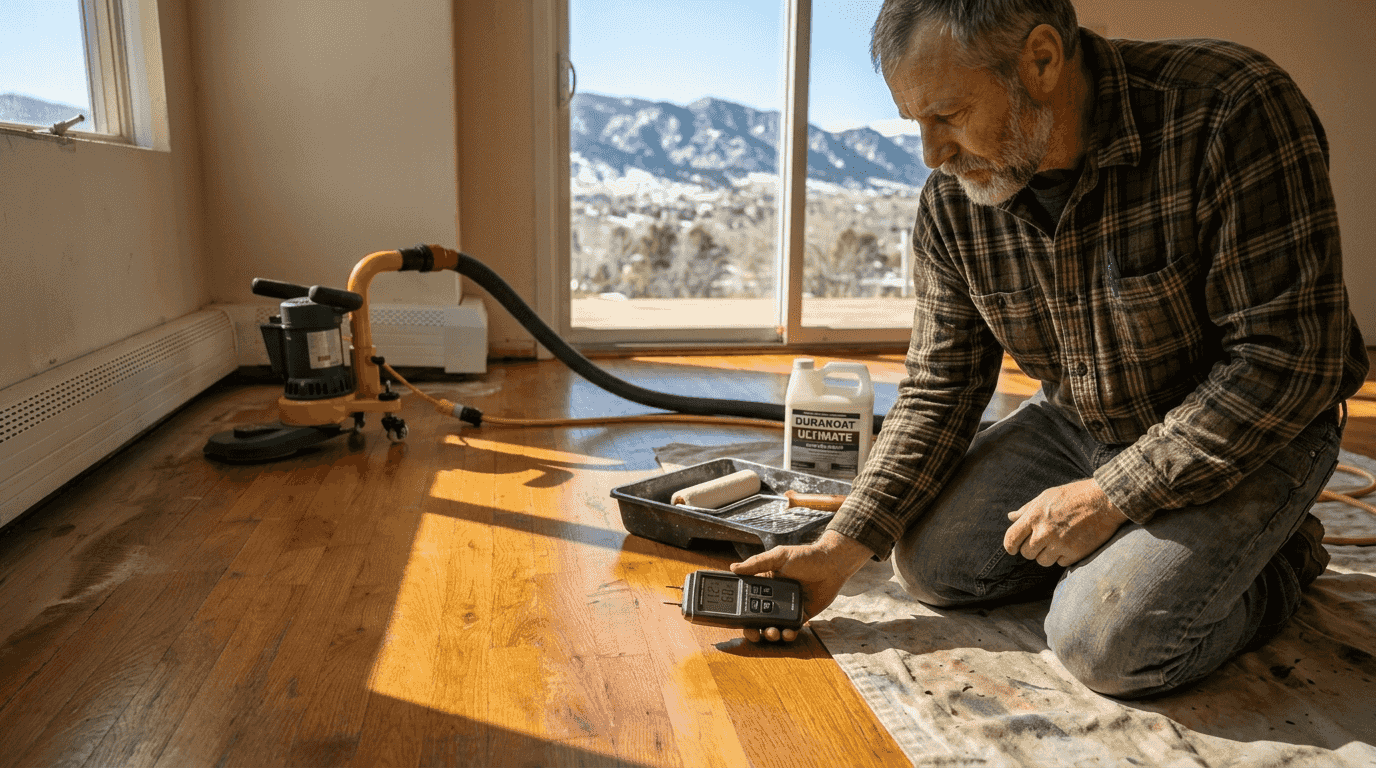
Dry air accelerates solvent evaporation, causing finishes to skin over before leveling properly. This rapid surface drying traps bubbles and brush marks that would normally flow out in higher humidity. Water-based finishes struggle especially in Colorado’s typical 20-30% indoor humidity during winter months. You’ll notice faster drying times than product labels indicate, shortening your working window for even application.
Temperature swings between day and night cause wood expansion and contraction that stresses fresh finish coats. A floor refinished during warm afternoon temperatures contracts as evening temperatures drop, potentially cracking finishes that haven’t fully cured. Colorado’s intense UV exposure through abundant sunny days also degrades certain finish types faster than in cloudier climates.
Adaptations for Colorado refinishing success:
- Run humidifiers to maintain 40-50% relative humidity during application and curing
- Schedule refinishing for stable weather periods avoiding dramatic temperature changes
- Choose UV-resistant finishes or apply protective window treatments on sun-exposed floors
- Extend drying times by 20-30% beyond manufacturer minimums to ensure complete cure
- Apply slightly thinner coats than normal to compensate for faster solvent evaporation
The altitude also affects how finishes perform. Lower air pressure at Colorado elevations changes how solvents evaporate and how products level. Some finishes formulated for sea-level application behave differently at 5,000+ feet elevation. Consult Denver floor restoration solutions for products proven in high-altitude conditions.
Pro Tip: Monitor humidity with a digital hygrometer throughout your refinishing project. If levels drop below 35%, delay finish application and run humidifiers until you achieve stable 40-50% humidity. This simple step prevents countless finish failures.
Expert hardwood floor refinishing services for Colorado homeowners
Avoiding costly refinishing mistakes often means partnering with experienced professionals who understand Colorado’s unique challenges. After learning about common pitfalls, many homeowners recognize that expert guidance delivers better value than risking expensive do-overs.
J.R. Hardwood Floor Refinishing & Cleaning brings decades of Colorado-specific experience to every project. Our team handles proper sanding progression, finish compatibility testing, and environmental controls that protect your investment. We’ve refined techniques specifically for Denver’s altitude and climate conditions.
Compare your options thoroughly using our DIY vs. professional refinishing services breakdown. Our complete guide to hardwood floor refinishing walks you through every decision point. Ready to discuss your specific floor? Visit J.R. Hardwood Floor Refinishing to schedule your free consultation and quote.
FAQ
What are the most common mistakes in hardwood floor refinishing?
Improper sanding, poor finish selection, inadequate surface preparation, and rushed application top the list of refinishing errors. Skipping intermediate sanding grits, applying incompatible finish types over existing coatings, and ignoring environmental factors like humidity cause most failures. These mistakes create durability and appearance problems that often require complete re-refinishing to correct.
Is it better to hire a professional or do hardwood floor refinishing yourself?
Choosing DIY depends on skill and willingness to avoid mistakes; professionals offer expertise reducing risks. DIY saves money but requires significant time, physical effort, and learning curve with specialized equipment. Professionals deliver consistent results through experience and proper tools but cost substantially more upfront. Evaluate your skill level, available time, and tolerance for potential mistakes honestly before deciding.
How does Colorado’s climate affect floor refinishing?
Colorado’s dry climate and temperature variation require special attention to finish type and application timing. Low humidity accelerates finish drying, creating application challenges and potential curing problems. Temperature swings cause wood movement that can stress fresh finishes before they fully cure. Using humidity control and choosing finishes formulated for dry climates prevents these regional issues.
How long should I wait between finish coats?
Wait times vary by finish type, but always follow manufacturer minimums as absolute minimums, not targets. Water-based polyurethane typically requires 2-3 hours between coats, while oil-based needs 8-10 hours. Colorado’s dry air may allow slightly shorter intervals, but extending times by 20-30% ensures better adhesion. Test by lightly sanding a small area; if finish gums up or rolls, wait longer before applying the next coat.