 Skip to content
Most homeowners dread the thought of refinishing hardwood floors because of the dust nightmare that comes with traditional sanding. Furniture covered in fine particles, air filters clogged, and days of cleanup are common complaints. Dustless sanding offers a cleaner, eco-friendly alternative that captures dust at the source, making hardwood floor restoration far less disruptive. This guide explains what dustless sanding is, how it works, and why it’s the preferred method for Colorado homeowners who value indoor air quality and efficient results.
Table of Contents
- Understanding Dustless Sanding: What It Is And How It Works
- Benefits Of Dustless Sanding For Colorado Homeowners
- How Dustless Sanding Fits Into Hardwood Floor Restoration And Maintenance
- Choosing And Preparing For Professional Dustless Sanding In Colorado
- Explore Professional Hardwood Floor Refinishing In Colorado
- Frequently Asked Questions
Key takeaways
| Point | Details |
|---|---|
| Dustless sanding captures dust immediately | Specialized vacuum systems attached to sanders trap up to 99% of airborne particles during the sanding process. |
| Improves indoor air quality | Reduces dust exposure and allergens, protecting families and pets from respiratory irritants. |
| Minimizes cleanup and disruption | Homeowners spend less time cleaning and experience shorter project timelines with less mess. |
| Eco-friendly restoration method | Uses advanced equipment to reduce dust pollution and environmental impact during floor refinishing. |
| Professional execution maximizes benefits | Proper equipment and expertise ensure optimal dust control and superior finish quality. |
Understanding dustless sanding: what it is and how it works
Traditional floor sanding creates clouds of fine dust that settle on every surface in your home. The particles infiltrate HVAC systems, coat furniture, and pose health risks, especially for people with allergies or respiratory conditions. Dustless sanding solves these problems by using vacuum systems attached directly to sanding machines that capture dust immediately as it’s created.
This method captures up to 99% of airborne dust during the sanding process, dramatically reducing the particles that escape into your home’s air. The technology relies on specialized sanders equipped with dust collection bags or connected to powerful industrial vacuums. As the sanding disc removes old finish and smooths wood, the vacuum pulls dust directly into a sealed container before it becomes airborne.
The eco-friendly benefits extend beyond cleaner air. Less dust pollution means reduced environmental impact and minimized health risks during refinishing projects. Dustless equipment allows professionals to work efficiently without frequent stops for cleanup, shortening project timelines and reducing disruption to your daily routine.
Pro Tip: Ensure the sanding equipment includes certified HEPA filtration for maximum dust capture and air quality improvement.
The process works through several key components:
- Sealed sanding machines that prevent dust leakage during operation
- High-powered vacuum systems with multiple filtration stages
- Dust collection bags or containers that trap particles securely
- HEPA filters that capture even microscopic dust particles
Unlike traditional methods that rely on fans and open windows to manage dust after it spreads, dustless sanding prevents the problem at its source. The vacuum operates continuously as the sander moves across your floor, maintaining constant suction that leaves minimal residue behind.
Benefits of dustless sanding for Colorado homeowners
Colorado’s dry climate amplifies dust problems during traditional sanding projects. Low humidity means dust stays airborne longer and spreads more easily throughout your home. Dustless sanding is particularly valuable in this environment because it improves indoor air quality by significantly reducing dust exposure compared to traditional methods.
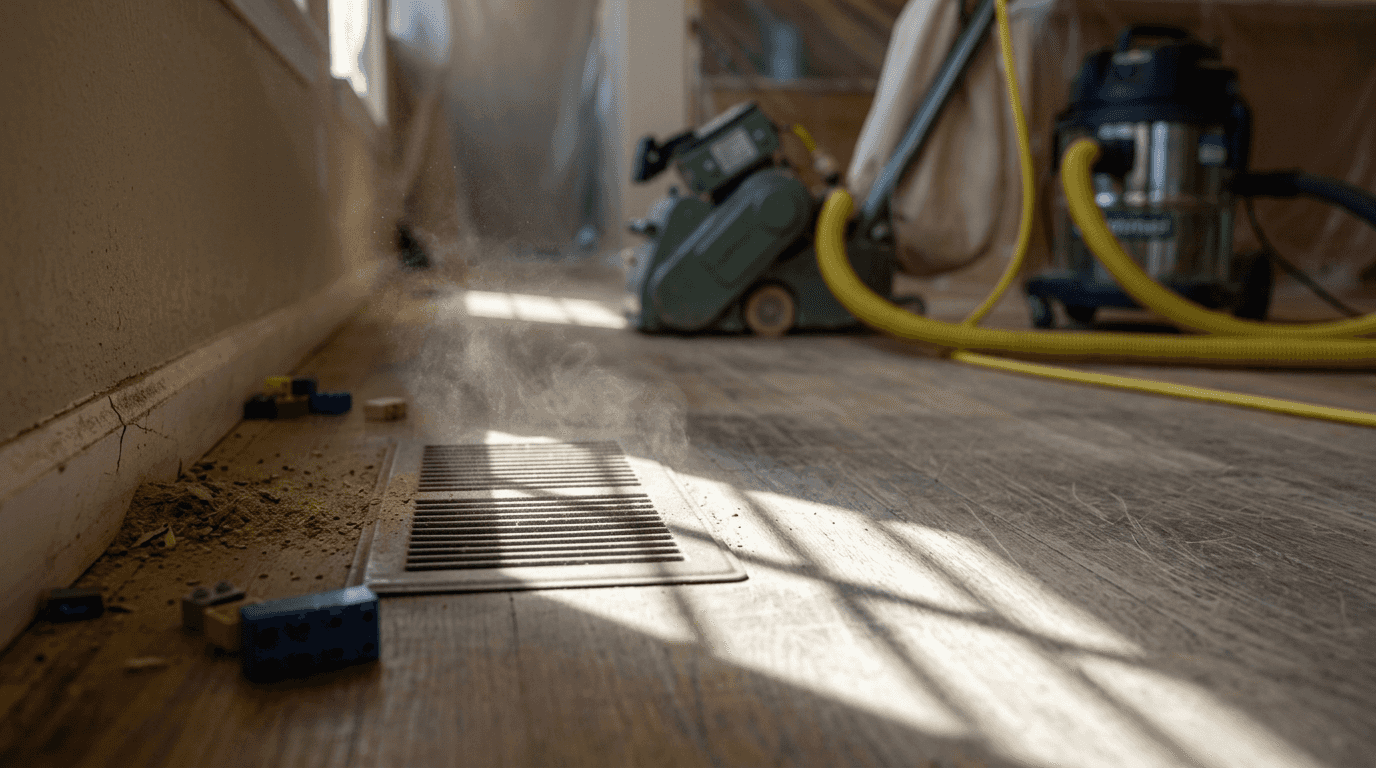
Families with children, elderly members, or pets benefit most from reduced dust exposure. Fine wood particles can trigger allergies, aggravate asthma, and cause respiratory irritation. By capturing dust immediately, dustless sanding protects your household from these health risks while the work is underway.
Cleanup time drops dramatically with dustless methods. Instead of spending days wiping down every surface, changing air filters, and vacuuming repeatedly, homeowners face minimal post-project cleaning. This reduced downtime means you can return to normal life faster and avoid the extended disruption that traditional sanding causes.
Dustless sanding reduces airborne particles by up to 99%, creating a healthier environment during floor refinishing and protecting household members from dust-related allergens and respiratory irritants.
The eco-friendly aspect aligns with growing interest in sustainable renovation practices among Colorado homeowners. Choosing dustless sanding demonstrates environmental responsibility while delivering practical benefits. You reduce dust pollution, minimize waste, and protect your home’s air quality without compromising on results.
Common complaints about traditional sanding disappear with dustless methods:
- Dust settling on furniture and belongings
- Clogged HVAC filters requiring replacement
- Particles spreading to rooms far from the work area
- Extended cleanup that delays project completion
Dustless sanding also protects your HVAC system by preventing dust from entering ductwork and filters. This saves money on filter replacements and prevents the need for duct cleaning after your floor sanding project is complete. Your heating and cooling system continues operating efficiently throughout the restoration process.
How dustless sanding fits into hardwood floor restoration and maintenance
Dustless sanding serves as the critical first step in restoring hardwood floors before staining or finishing. Proper sanding enhances durability and beauty, setting the foundation for effective refinishing. Understanding where it fits in the complete restoration process helps homeowners appreciate its importance.
The typical hardwood floor restoration follows these steps:
- Inspection and preparation of the floor and surrounding area to identify damage and plan the approach
- Dustless sanding to remove old finishes, scratches, and imperfections while capturing debris
- Sealing and finishing application to protect wood and enhance appearance
- Maintenance guidance to prolong floor life and preserve the refinished surface
Dustless sanding happens after professionals assess your floor’s condition but before any new finish is applied. The sanding process removes worn polyurethane, surface scratches, and discoloration, revealing fresh wood underneath. Multiple passes with progressively finer sandpaper grits create a smooth surface ready for staining and sealing.
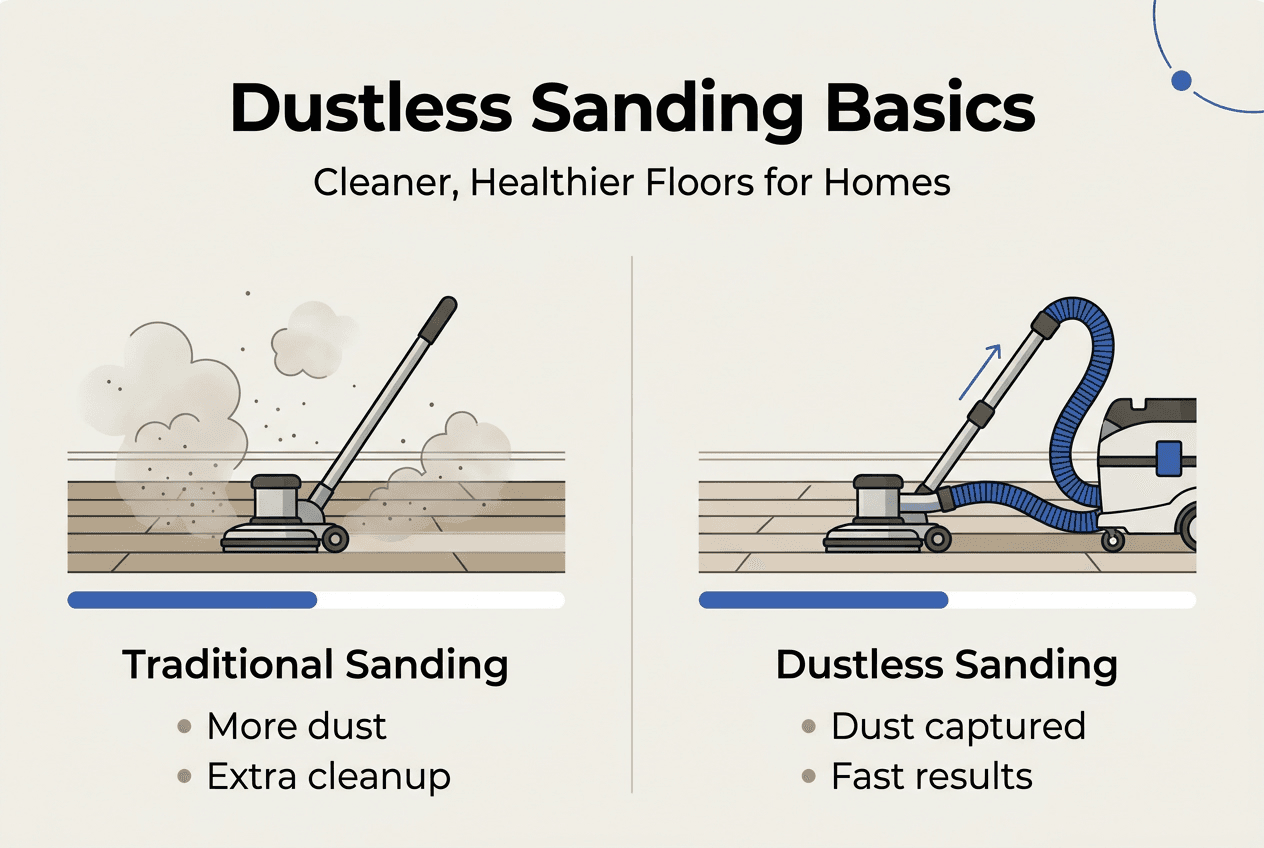
| Aspect | Traditional Sanding | Dustless Sanding |
|---|---|---|
| Dust control | Minimal, relies on ventilation | Captures 99% at source |
| Cleanup time | Several days of intensive cleaning | Minimal post-project cleaning |
| Health impact | High dust exposure risks | Significantly reduced exposure |
| Project duration | Extended due to cleanup needs | Shorter with efficient workflow |
| HVAC protection | Filters require replacement | Systems remain clean |
While dustless sanding requires less preparation around your home compared to traditional methods, professional expertise ensures optimal results. Experienced technicians know how to adjust equipment settings, select appropriate sandpaper grits, and maintain consistent vacuum suction throughout the project. They understand how different wood species respond to sanding and can identify potential problems before they affect your floor’s appearance.
Pro Tip: Coordinate furniture removal and air filtration in your home to maximize dust control benefits during sanding, and consider running air purifiers in adjacent rooms.
Homeowners should understand that proper sanding workflow requires attention to detail at every stage. Professionals inspect floors for loose boards, protruding nails, and structural issues before beginning. They seal off work areas, protect walls and trim, and establish dust barriers even with dustless equipment to ensure complete containment.
After sanding is complete, the floor undergoes thorough cleaning to remove any remaining fine particles. This preparation ensures stain and finish adhere properly and cure evenly. Skipping this step or rushing through it compromises the final appearance and durability of your refinished floor.
Choosing and preparing for professional dustless sanding in Colorado
Selecting the right professional for your dustless sanding project requires evaluating several key factors. Experience matters because proper technique affects both dust control and finish quality. Look for contractors who specialize in hardwood floor restoration and have extensive dustless sanding experience in Colorado homes.
Equipment quality directly impacts results. Ask potential service providers about their dust collection systems, whether they use HEPA filtration, and how often they maintain their equipment. Professional dustless sanding services offer expertise and equipment that greatly improve results and minimize homeowner disruption.
Reviews and references provide insight into a company’s reliability and customer satisfaction. Check multiple platforms for consistent positive feedback about dust control, project timelines, and final results. Companies with strong reputations typically maintain high standards and stand behind their work with guarantees.
Eco-friendly practices extend beyond dustless sanding to include the finishes and products used. Ask whether contractors offer low-VOC or water-based finishes that complement the health benefits of dustless sanding. Companies committed to environmental responsibility often provide multiple eco-friendly options.
Key questions to ask service providers:
- What type of dust collection system do you use and does it include HEPA filtration?
- How many years of experience do you have with dustless sanding specifically?
- Can you provide references from recent Colorado projects?
- What preparations do homeowners need to make before you begin?
- Do you offer guarantees on dust control and finish quality?
Homeowners should prepare their space to optimize dustless sanding results:
- Remove all furniture and belongings from rooms being refinished
- Cover or seal air vents to prevent any dust from entering ductwork
- Plan for project duration and arrange temporary living adjustments if needed
- Secure pets in areas away from the work zone
- Clear access paths for equipment and materials
Pro Tip: Ventilate your home well before and after sanding and use air purifiers to maintain indoor air quality, especially in rooms adjacent to the work area.
Professional services typically include full cleanup as part of their package, offering peace of mind compared to DIY approaches. They handle debris disposal, final surface cleaning, and inspection to ensure your floor is ready for finishing. This comprehensive service justifies the investment and delivers results that DIY methods struggle to match. Comparing DIY versus professional approaches helps homeowners make informed decisions about their floor restoration projects.
Explore professional hardwood floor refinishing in Colorado
Ready to transform your hardwood floors without the dust nightmare? J.R. Hardwood Floor Refinishing & Cleaning specializes in professional dustless sanding throughout the Denver Metro Area and surrounding Colorado communities. Our eco-friendly methods protect your indoor air quality while delivering stunning results that last.

Whether you’re weighing DIY versus professional refinishing or need guidance on your specific floor condition, our team provides expert consultation and transparent pricing. Explore our complete refinishing guide to understand the full restoration process, or visit our Q&A resource for answers to common questions. Contact us today for a free quote and discover how dustless sanding can revitalize your hardwood floors with minimal disruption.
Frequently asked questions
What is dustless sanding and is it really dust-free?
Dustless sanding uses specialized vacuum systems attached to sanding equipment to capture dust immediately as it’s created during floor refinishing. While the term suggests complete dust elimination, the process actually captures up to 99% of airborne particles rather than being entirely dust-free. This dramatic reduction makes a significant difference compared to traditional methods that allow dust to spread throughout your home. Professional equipment and proper technique maximize containment, and homeowners experience vastly reduced cleanup requirements. The small amount of residual dust that may escape is minimal and easily managed with basic cleaning.
How does dustless sanding improve indoor air quality during refinishing?
Dustless sanding reduces airborne fine dust particles by up to 99%, greatly improving indoor air quality during floor refinishing. By capturing dust at the source before it becomes airborne, the process prevents particles from spreading through your home’s air circulation system. This protects household members from respiratory irritants and allergens that traditional sanding releases. Families with asthma, allergies, or other respiratory sensitivities benefit most from this improved air quality. The immediate dust capture also prevents particles from settling on surfaces throughout your home, maintaining cleaner air in rooms adjacent to the work area.
Can I do dustless sanding myself, or should I hire a professional?
DIY dustless sanding is technically possible if you rent specialized equipment, but it requires significant expertise to achieve professional results. Proper technique involves maintaining consistent vacuum suction, selecting appropriate sandpaper grits, and understanding how different wood species respond to sanding. Professional dustless sanding services deliver superior results and minimize home disruption compared to DIY methods. Professionals own commercial-grade equipment with better dust collection capabilities than rental units, and they have experience troubleshooting problems that arise during sanding. The investment in professional service typically pays off through better finish quality, shorter project timelines, and guaranteed results.
What should I do to prepare my home for a dustless sanding project?
Remove all furniture, rugs, and belongings from rooms being refinished to give professionals clear access to your floors. Cover or seal air vents to prevent any residual dust from entering your HVAC system, and secure pets in areas away from the work zone for their safety and to avoid disrupting the project. Ensure good ventilation by opening windows in adjacent rooms before and after the project to maintain air circulation. Consult your chosen professionals about any special preparations needed based on your home’s layout and floor condition. Following essential preparation steps ensures the smoothest possible project experience and optimal results.
Recommended
- Restoring Hardwood Floors Without Sanding: A Denver Guide
- Why post-construction cleaning matters for Citrus County – white-diamond-pressure
- Sanding Cabinets for Paint: Ottawa Home Upgrade Guide