 Skip to content
TL;DR:
- Grit is the primary cause of floor scratches because tiny particles act like sandpaper underfoot, causing damage over time.
- Regular cleaning habits, like sweeping, vacuuming, and using doormats, significantly reduce grit accumulation and protect flooring finishes.
You’ve swept, you’ve cleaned, and yet somehow your floors are still picking up scratches. If you’ve been blaming your dog or your dining chairs, you’re not alone — but you might be pointing the finger at the wrong suspect. Understanding what causes floor scratches goes deeper than furniture legs and pet claws. The real story involves something far smaller and far more relentless: grit. This guide walks you through every major cause of floor scratching, explains which floor types are most vulnerable, and gives you practical habits to protect your investment starting today.
Table of Contents
- Key takeaways
- What causes floor scratches more than anything else
- Pets, furniture, and other scratch causes
- How floor hardness and finish affect scratch resistance
- Maintenance habits that prevent floor scratches
- When scratches become character
- My take after years of working with floors
- Let us help you get your floors back
- FAQ
Key takeaways
| Point | Details |
|---|---|
| Grit is the top culprit | Tiny sand and dirt particles act like sandpaper under foot traffic, causing most floor scratches. |
| Floor hardness matters | Softer wood species and high-gloss finishes show scratches much more visibly than harder, textured options. |
| Pet nails need maintenance | Trimming pet nails every 2 to 3 weeks significantly reduces fine surface scratches on hardwood. |
| Cleaning habits protect finishes | Damp mopping and routine vacuuming preserve your finish far longer than occasional deep cleaning. |
| Professional help is worth it | Deep scratches benefit from refinishing rather than DIY spot repairs, which often make damage more noticeable. |
What causes floor scratches more than anything else
Most homeowners are surprised to learn that grit is the primary culprit behind floor scratching — not furniture, not pets. Think of grit as the sandpaper hiding on your floor. Every time someone walks across sand, dirt, or mineral debris tracked in from outside, those tiny particles grind into the finish with each footstep.
Here is the science behind it, explained simply. When a harder particle sits between your shoe and your floor, the pressure of your body weight forces it to drag across the surface. This is called mechanical abrasion, and it works in two ways. Plowing and cutting modes describe how grit either pushes the finish material into ridges or shears it off entirely. Over time, those micro-deformations build up, and what started as an invisible scuff becomes a dull, scratched finish you can see from across the room.
Foot traffic makes this worse by constantly redistributing grit across the floor rather than concentrating it in one place. Pets are also major grit carriers because their paws pick up debris from every surface they walk on, including the yard, the garage, and the porch.
Here is what you can do right now:
- Place quality doormats at every entrance to catch grit before it reaches your floors
- Sweep or vacuum two to three times per week in high-traffic areas to remove fine debris before it gets ground in
- Shake out or wash entry mats regularly since a loaded mat deposits grit just as fast as bare feet
- Ask guests to remove shoes at the door, especially in wet or sandy conditions
Pro Tip: A no-shoes policy is one of the single most cost-effective floor protection habits you can build. Pair it with a washable rug near entryways, and you dramatically cut the amount of grit your floor ever encounters.
Pets, furniture, and other scratch causes
Grit is the main event, but the causes of scratches on floors do not stop there. Pets, furniture, and even your home’s environment all play supporting roles in floor wear. Knowing each one helps you target your prevention efforts where they matter most.
Pet nails create fine, thin scratches that run in random directions across your floors, especially in the paths your dog or cat travels most. Long claws act like tiny chisels, particularly on softer wood species. Trimming pet nails every 2 to 3 weeks reduces this significantly. For very active dogs that resist trimming, silicone nail caps can eliminate nail damage altogether. They slip over each claw and are available at most pet stores.
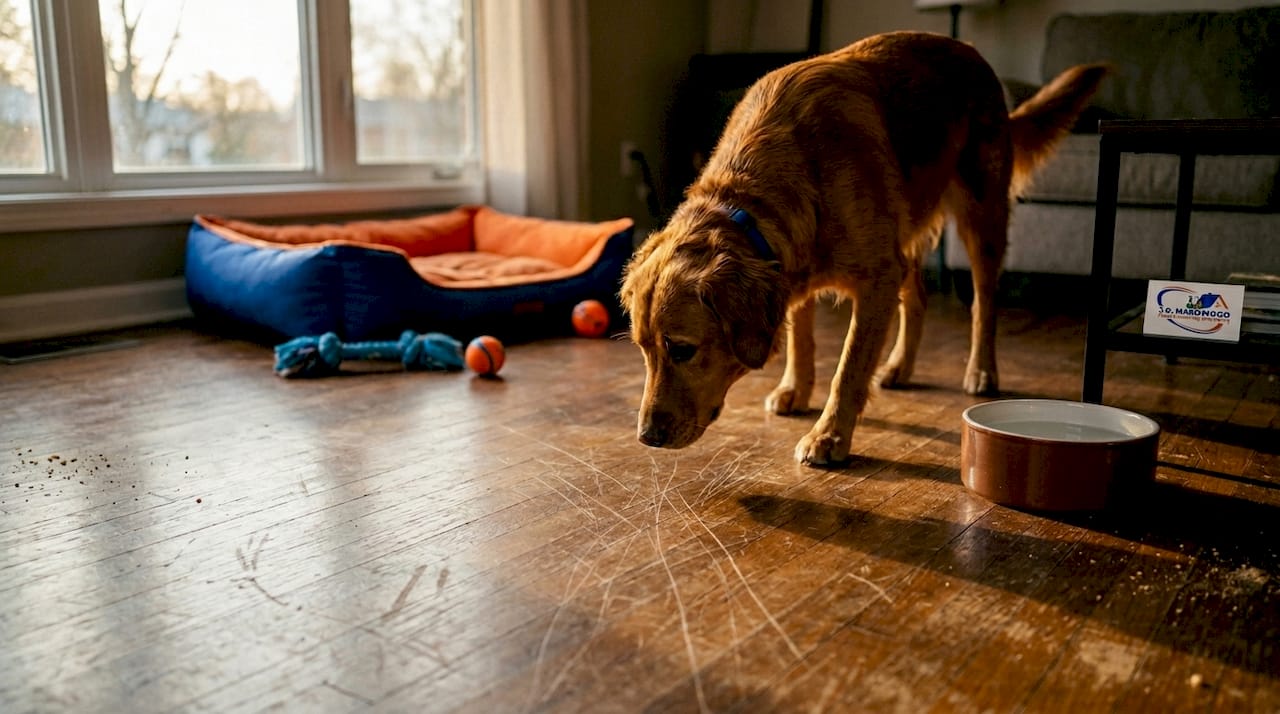
Furniture movement is a close second. The mistake most people make is sliding chairs or tables across the floor rather than lifting them. Dragging furniture causes visible marks that often go all the way through the finish. Felt pads on every furniture leg make a big difference here. Replace them every six months because worn felt pads collect grit and become abrasive themselves. Rolling office chairs deserve special attention too. Even soft caster wheels grind fine debris with every roll, so a chair mat is worth the minor inconvenience.
Environmental factors are the ones most homeowners overlook. Moisture causes wood fibers to expand and contract, which softens the finish over time and makes it more vulnerable to scratching. High humidity in Colorado summers and the very dry air in winter months create a cycle that stresses wood floors more than many people realize.
- Use a whole-home humidifier to keep indoor humidity between 35 and 55 percent
- Wipe up spills immediately rather than letting moisture sit
- Avoid wet mopping, which pushes water into the seams between boards
Pro Tip: If you have pets, place washable rugs in their favorite paths through the house. Your floors will thank you, and it is much cheaper than refinishing. Check out our floor care tips for pet owners for more ideas.
How floor hardness and finish affect scratch resistance
Not all floors scratch equally. Two floors in similar households can look dramatically different after a few years because of the wood species and finish used. This is where the Janka hardness scale comes in. It measures how much force is needed to press a steel ball halfway into a piece of wood, which gives a reliable picture of how well a species resists denting and surface damage.
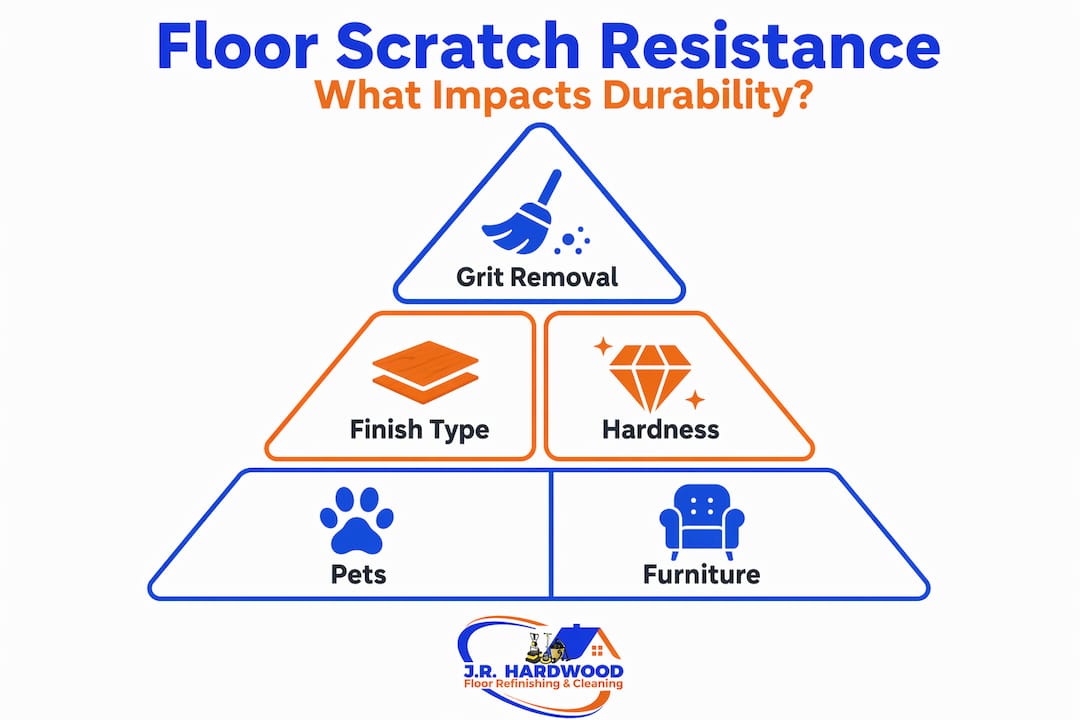
Aluminum oxide coatings are the most scratch-resistant finish available, which is why most factory-finished hardwood uses them. Urethane finishes offer good protection but wear down faster in high-traffic zones. High-gloss finishes look beautiful when new, but they show every micro-scratch because light reflects directly off the surface. Matte and satin finishes scatter light, which makes fine scratches far less noticeable.
Here is how common flooring types compare:
| Wood Species | Janka Hardness Rating | Scratch Resistance |
|---|---|---|
| Brazilian Teak | 3540 | Excellent |
| Hickory | 1820 | Very Good |
| White Oak | 1360 | Good |
| Red Oak | 1290 | Moderate |
| Pine | 870 | Poor |
| Brazilian Cherry | 2350 | Excellent |
One thing worth knowing: newly finished floors often scratch more easily in the first few weeks because the finish is still curing. Dark stains also reveal scratches more visibly because the light wood exposed by a scratch contrasts sharply with the dark color around it. If you love dark floors and live in a busy household, a hand-scraped or wire-brushed texture will hide everyday wear much better than a smooth, glossy surface. That is not a workaround. It is smart design. Surface textures like those naturally hide scratches better than flat, polished finishes. Learning about scratch-resistant floor options before you buy or refinish can save you years of frustration.
Maintenance habits that prevent floor scratches
Prevention is genuinely easier than repair, and a few consistent habits go a long way. Here is a practical routine that protects your finish and keeps your floors looking their best.
- Sweep or vacuum regularly. Aim for two to three times per week in areas with heavy foot traffic. Use a vacuum with a hardwood setting or a soft-bristle broom. Avoid vacuums with beater bars, which can scuff the surface.
- Damp mop, never soak. Damp mopping is preferred over soaking wet mopping because excess moisture works into seams and softens the finish. Wring your mop thoroughly before it touches the floor.
- Skip the harsh cleaners. Abrasive scrubbing pads and strong chemical cleaners strip protective finishes faster than normal wear does. Stick to products designed for hardwood or laminate.
- Reapply protective finish on schedule. In high-traffic areas, applying fresh urethane finish every 6 to 12 months keeps the surface sealed and scratch-resistant. Think of it like putting sunscreen on your floors before summer.
- Address surface scratches early. Small scratches can often be buffed out or treated with a color-matched wood filler before they become deep gouges that require full refinishing.
- Check and replace felt pads. Set a reminder every six months to inspect and replace felt furniture pads. A worn pad is worse than no pad at all.
Pro Tip: For light surface scratches, a scratch removal approach like screen and recoat can restore your floor without full sanding. Save full professional refinishing for deep gouges that penetrate the wood itself.
When scratches become character
Here is something most floor care articles skip: not every scratch is a problem. Hardwood floors develop an attractive patina over time, and design professionals often describe this as part of the floor’s character. A home that has been lived in looks like a home, not a showroom.
The distinction worth drawing is between normal wear and damage that compromises the wood. Fine surface scratches in the finish layer are mostly cosmetic. Gouges that cut through the finish and into the wood fiber are a different story because they allow moisture to enter and cause swelling, staining, and long-term structural wear.
There is one factor that accelerates wear even when you are doing everything right: uneven subfloors. Floor flexion from an uneven subfloor wears finish faster because boards shift slightly underfoot with each step, even when felt pads are in place. If your floor feels springy or you notice finish wearing unevenly in certain spots, the subfloor is worth investigating before refinishing.
“The best-maintained floors are not the ones that look untouched. They are the ones that look healthy — warm, clean, and cared for — with a little life written into the grain.”
Knowing how to prevent scratches on hardwood floors in Colorado specifically helps because our climate adds an extra layer of stress through dry winters and humid summers.
My take after years of working with floors
I have walked through hundreds of homes across the Denver Metro Area where the homeowner was convinced their dog had destroyed their floors, or that the furniture movers caused all the damage. And sometimes that is true. But more often, when I look closely, the culprit is grit that was never cleaned up consistently.
The most cost-effective thing I have ever seen a homeowner do is put down a good doormat and vacuum twice a week. That simple habit extends finish life by years. I have seen floors in pet-friendly homes that look better after a decade than floors in pristine, no-pet households, simply because the pet household had better cleaning routines.
My other honest take: chasing perfection usually leads to over-maintaining. Aggressive scrubbing, too many coats of wax, and harsh cleaning products actually accelerate finish breakdown. Moisture and improper cleaning are genuinely some of the biggest enemies of floor durability. Gentle and consistent beats intense and sporadic every time.
If you are seeing scratches multiply, do not wait until full refinishing is unavoidable. A screen and recoat while the finish still has some life in it costs far less than sanding down to bare wood. Proactive care is the real secret.
— J.R.
Let us help you get your floors back
If your floors have moved past what a good cleaning routine can fix, Jrhardwoodfloorrefinishingandcleaning is here to help. We serve homeowners and businesses throughout the Denver Metro Area and surrounding Colorado communities, from Parker and Castle Rock to Boulder and Colorado Springs.
Whether your floors need a light screen and recoat or a full sanding and refinishing, we match the right solution to your floor’s actual condition rather than recommending more than you need. Our team provides free over-the-phone quotes, clear scheduling, and eco-friendly finishes that protect your floors for years. If you are weighing your options, our guide on DIY vs. professional refinishing lays out exactly what each path involves. For a deeper look at the process, our complete refinishing guide covers everything from prep to final coat. Reach out today and let’s give your floors the care they deserve.
FAQ
What is the number one cause of floor scratches?
Grit is the leading cause of floor scratches. Tiny sand and dirt particles act like sandpaper under foot traffic, grinding into the finish with every step and causing wear over time.
Why do my hardwood floors scratch so easily?
Softer wood species like pine and floors with high-gloss finishes show scratches more readily because they offer less surface resistance. Dark stains also make scratches more visible by creating contrast with the exposed lighter wood beneath.
Do pets cause more floor damage than furniture?
Both contribute, but in different ways. Pet nails create fine, frequent scratches, while furniture causes deeper marks when dragged. Regular nail trimming and felt pads on furniture legs address both issues effectively.
What causes laminate scratches specifically?
Laminate scratches come from the same sources as hardwood: grit, furniture dragging, and pet nails. Because laminate cannot be sanded and refinished, prevention through consistent cleaning and protective pads matters even more.
How do I stop my floors from getting scratched?
The most effective combination is sweeping or vacuuming two to three times per week, using entry mats to trap grit, placing felt pads on all furniture, keeping pet nails trimmed, and reapplying a protective finish on a regular schedule in high-traffic areas.