 Skip to content
TL;DR:
- Moisture is the primary cause of floor damage across all materials, leading to cupping, swelling, and rot. Recognizing early signs like squeaks and tile cracks helps prevent costly repairs and subfloor deterioration. Consistent maintenance, moisture control, and prompt professional evaluation are essential for preserving Colorado floors’ integrity and appearance.
Common floor damage types are the visible and hidden defects that compromise your flooring’s structural integrity and appearance, ranging from surface scratches and moisture warping to subfloor rot and tile cracking. Recognizing these defects early is the difference between a quick repair and a full replacement. Colorado’s dry climate, temperature swings, and snowy winters create a unique set of conditions that accelerate certain damage patterns, especially in hardwood and laminate. Whether you manage a single-family home in Parker or a commercial property in Denver, knowing what to look for puts you in control of your floors and your budget.
What are the most common types of floor damage by material?
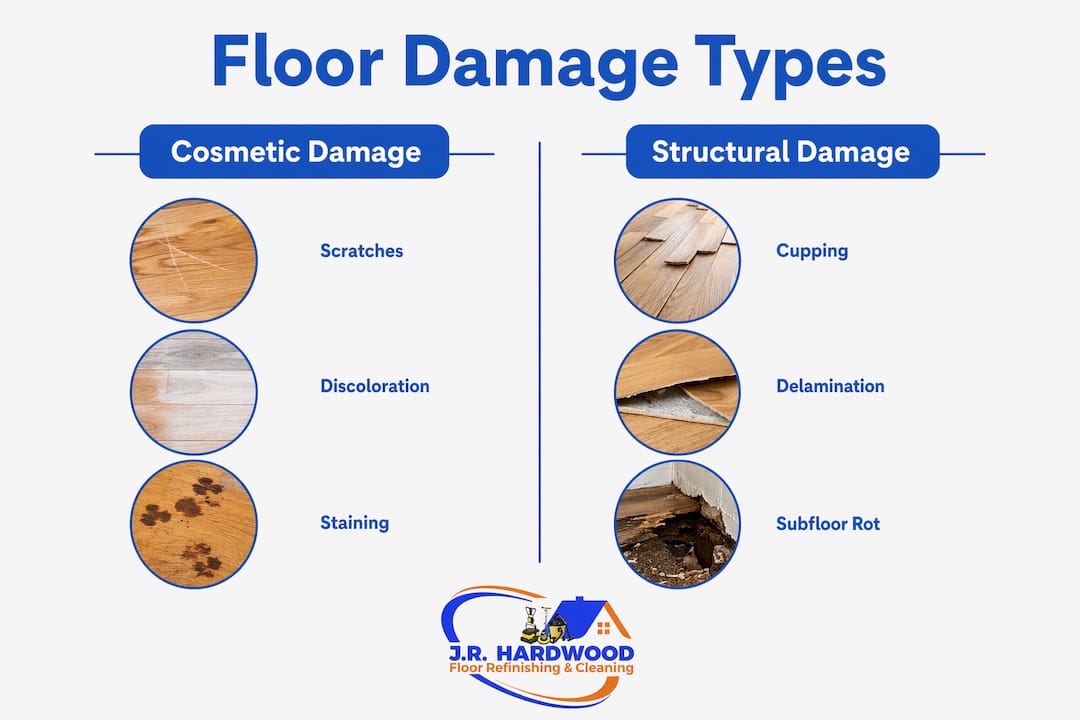
Floor damage falls into two broad categories: cosmetic and structural. Cosmetic damage affects appearance but not safety. Structural damage compromises the floor’s foundation and, if ignored, can cost far more to fix. Distinguishing cosmetic from structural damage prevents costly repairs by addressing root causes early.
Each flooring material has its own vulnerability profile. Here is a quick breakdown:
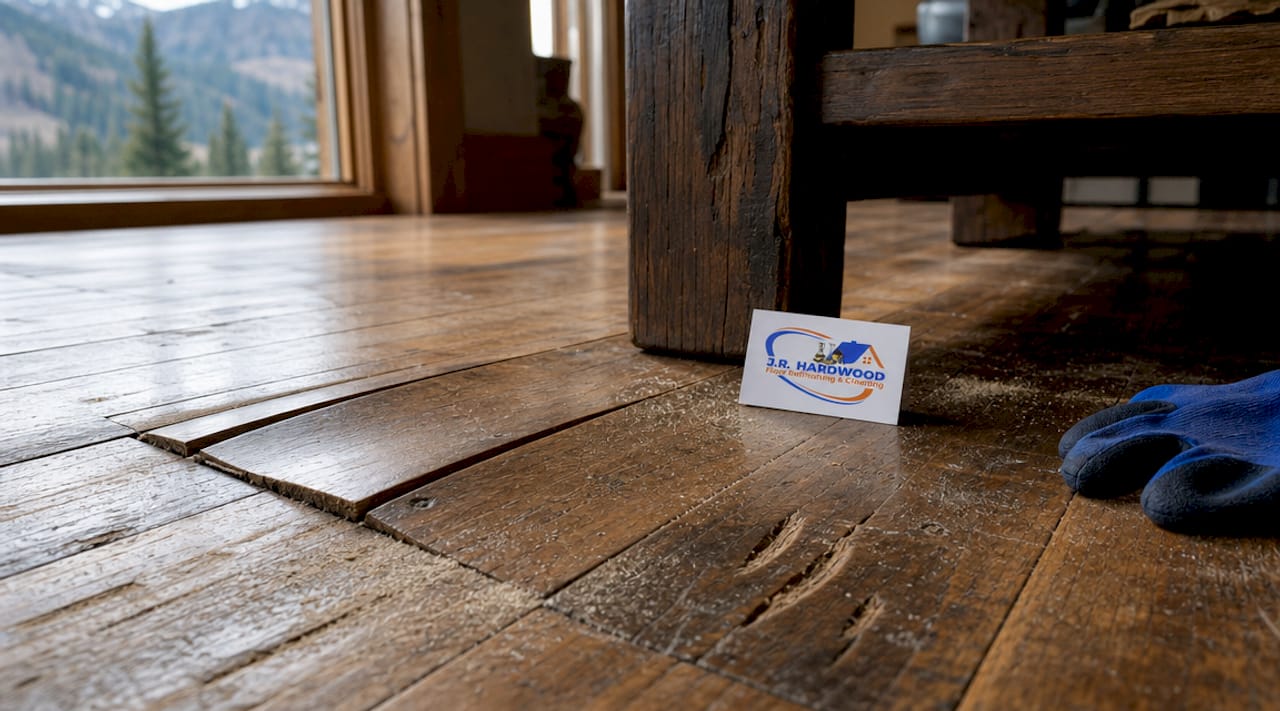
Hardwood: Cupping (edges rise above the center), crowning (center rises above edges), deep scratches, gouges, and UV fading are the most frequent issues. Solid hardwood can last 50 to 100 years with proper care, but moisture mismanagement cuts that lifespan dramatically.
Laminate: Swelling, delamination (the top layer separating from the core), bubbling, and chipping are the telltale signs of laminate in distress. Laminate typically lasts 15 to 25 years, but it is highly sensitive to standing water.
LVP (Luxury Vinyl Plank): Peeling, lifting at seams, indentation from heavy furniture, and discoloration from UV exposure are the primary concerns. LVP is more water-resistant than laminate but not immune to damage.
Tile: Grout cracking, individual tile chips, and straight-line fractures that trace across multiple tiles are the warning signs. Tile can last over 50 years, but cracked grout lets moisture reach the subfloor.
Carpet: Fiber matting, staining, fraying at edges, and rippling from improper installation or moisture underneath are the most common issues. Carpet has the shortest lifespan of any flooring material, typically 5 to 8 years in high-traffic areas.
| Floor Type | Most Common Damage | Primary Cause | Repairability |
|---|---|---|---|
| Solid hardwood | Cupping, scratches, fading | Moisture, UV, wear | High (refinishable) |
| Laminate | Swelling, delamination | Water exposure | Low (usually replaced) |
| LVP | Lifting seams, indentation | Heavy loads, UV | Moderate (plank swap) |
| Tile | Grout cracks, chips | Subfloor movement | High (individual tiles) |
| Carpet | Matting, staining, rippling | Traffic, spills | Moderate (patching) |
How does moisture affect different flooring materials?
Moisture is the single biggest threat to floors in Colorado homes. You might assume the dry mountain air protects your floors, but the reality is more complicated. Seasonal humidity swings, snowmelt tracked indoors, and bathroom or kitchen leaks create localized moisture events that floors absorb quickly. Excess moisture penetration into flooring seams or the subfloor is the leading cause of floor failure.
In hardwood, moisture imbalance causes two distinct problems. Cupping happens when the bottom of the plank absorbs more moisture than the top, causing edges to rise. Crowning is the opposite: the top swells more than the bottom, creating a hump in the center. Water-related damage causes cupping and crowning in hardwood and swelling or delamination in laminate and LVP, often requiring full replacement.
The risks go deeper than the surface. When moisture reaches the OSB or plywood subfloor, you get mold growth, rot, and structural softening. A spongy step is a high-urgency indicator of subfloor moisture damage that cannot be fixed by surface repairs alone. That soft, bouncy feeling underfoot means the subfloor is compromised and needs professional evaluation before any new flooring goes down.
Pro Tip: Place a small rug or waterproof mat directly in front of your kitchen sink and bathroom vanity. These two spots account for the majority of localized moisture damage in Colorado homes, and a simple mat costs a fraction of what a subfloor repair does.
Watch for these moisture warning signs across your home:
- Edges lifting or curling on hardwood or LVP planks
- Bubbling or soft spots in laminate
- Musty odors coming from the floor, especially in basements
- Discoloration or dark staining around baseboards
- Grout lines that feel soft or crumble when pressed
What role do wear and impact play in common floor damage types?
Daily life is hard on floors. Every footstep, dragged chair, dropped pan, and pet sprint across the kitchen adds up over time. Wear and impact damage is the most gradual of all flooring issues, which is exactly why it catches so many homeowners off guard. You stop noticing the slow fade until the floor looks nothing like it did when you moved in.
Scratches are the most universal sign of floor wear. On hardwood, they range from light surface marks that a screen and recoat can fix to deep gouges that require sanding. On LVP, scratches cut through the wear layer and cannot be buffed out, meaning the plank needs replacing. Traffic lanes in high-use areas cause accelerated wear, and using runners while regularly moving furniture distributes that wear and extends floor life.
Pet nails are a specific concern for hardwood owners in Colorado. Dogs and cats create a pattern of fine, diagonal scratches concentrated in the areas where they run and turn. These scratches are cosmetic at first but eventually cut through the finish and into the wood itself, making refinishing necessary sooner than expected.
Pro Tip: Trim your pet’s nails every two to three weeks and place a runner in the hallway where they sprint most. This one habit can add years to a hardwood floor’s finish life.
Here are the most effective ways to reduce wear and impact damage:
- Attach felt pads to all furniture legs, including chairs that move frequently
- Use area rugs in living rooms and runners in hallways
- Adopt a no-shoes policy at the door, since up to 80% of dirt enters from outside and acts like sandpaper on hard floor surfaces
- Place dual doormats at every entrance, one outside and one inside, to trap grit before it reaches your floors
- Avoid dragging furniture; always lift and carry
How to identify early signs of structural and subfloor damage
Structural floor damage is the category that keeps property managers and homeowners up at night, and for good reason. Ignoring structural warning signs risks subfloor repairs that can exceed $10,000. The good news is that your floors give you clear signals before things get that serious.
Persistent squeaking is one of the first signs. A squeak here and there is normal, but squeaks that appear in new spots or grow louder over time indicate that the subfloor is shifting or that fasteners are loosening. Sagging, dips, or noticeably uneven sections of floor are more serious and point to joist problems or subfloor deterioration.
Tile cracks deserve special attention. A single chipped tile is cosmetic. But telegraphing cracks in tile that run in straight lines across multiple tiles usually stem from subfloor movement rather than tile defects. Replacing the tile without addressing the subfloor movement means the new tile will crack again within months.
| Warning Sign | Likely Cause | Risk Level | Recommended Action |
|---|---|---|---|
| Spongy or bouncy step | Subfloor moisture damage | High | Professional inspection immediately |
| Straight-line tile cracks | Subfloor or joist movement | High | Assess subfloor before tile repair |
| Persistent new squeaks | Fastener loosening, shifting | Medium | Monitor; consult a professional |
| Musty odor from floor | Mold or rot beneath surface | High | Professional remediation |
| Sagging or dips | Joist damage or rot | High | Structural assessment required |
| Dark stains near baseboards | Moisture intrusion | Medium | Identify source; dry thoroughly |
Mold hidden beneath flooring is a health risk, not just a structural one. If you notice a persistent musty smell even after cleaning, treat it as a structural issue until proven otherwise.
What are the best maintenance and repair practices to prevent or fix floor damage?
The best floor maintenance plan is the one you actually follow consistently. Here is a practical, material-specific approach to keeping your floors in great shape and catching problems before they grow.
-
Dry clean first, always. Sweep or vacuum before any wet cleaning. Grit left on the floor acts like sandpaper under a mop. Use a microfiber dust mop on hardwood and LVP daily in high-traffic areas.
-
Use the right cleaner for your floor type. Improper cleaning with excess water or harsh chemicals accelerates damage in hardwood and laminate. Use pH-neutral, floor-specific cleaners and wring your mop nearly dry before it touches the floor.
-
Protect high-traffic zones proactively. Lay area rugs in living rooms, runners in hallways, and mats at every entry point. Rotate rugs every few months so wear distributes evenly across the floor beneath.
-
Address small repairs before they grow. Many common floor damages like scratches and dents can be repaired professionally or DIY depending on severity. Hardwood can be spot-repaired or refinished. Individual tiles can be replaced without touching the rest of the floor. Laminate that has swollen from water usually needs full plank replacement.
-
Schedule professional maintenance on a cycle. Hardwood floors benefit from a screen and recoat every three to five years to refresh the finish before wear reaches the wood. Full sanding and refinishing restores floors that have gone past that point.
-
Control moisture at the source. Fix leaky appliances immediately, use exhaust fans in bathrooms and kitchens, and maintain indoor humidity between 35% and 55% year-round. In Colorado, a whole-home humidifier during winter prevents the excessive drying that causes hardwood to shrink and gap.
For a deeper look at preventing hardwood damage specific to Colorado’s climate, we have a dedicated guide that walks through each season’s unique risks and how to handle them.
Key takeaways
Moisture is the leading cause of serious floor damage across all material types, and catching structural warning signs early is the most cost-effective floor care decision a Colorado homeowner can make.
| Point | Details |
|---|---|
| Moisture causes the most damage | Cupping, swelling, and subfloor rot all start with uncontrolled moisture exposure. |
| Structural signs need immediate action | Spongy floors, musty odors, and straight-line tile cracks require professional evaluation. |
| Material type determines repairability | Hardwood refinishes well; laminate usually needs replacement when water-damaged. |
| Prevention costs far less than repair | Felt pads, mats, and dry cleaning routines protect floors for pennies compared to restoration costs. |
| Colorado climate adds specific risks | Seasonal humidity swings and snowmelt create moisture events that accelerate floor damage. |
What I’ve learned after years of seeing Colorado floors up close
Here is something I tell every homeowner who calls us: the floors that end up needing the most expensive repairs are almost never the ones that got one big disaster. They are the ones that got a hundred small things ignored. A little moisture under the kitchen mat. A scratch that “wasn’t that bad.” Grout that started crumbling two years ago but nobody called anyone.
Colorado’s climate is genuinely tough on floors in ways that surprise people. The dry winters pull moisture out of hardwood so aggressively that boards shrink and gaps appear. Then spring humidity swings the other way. Floors that are not properly finished and maintained cycle through that stress every single year. Over time, it adds up.
The misconception I run into most often is that refinishing is only for floors that look terrible. That is backwards. The best time to refinish is before the floor looks terrible, when a screen and recoat can do the job instead of a full sand. Waiting until the finish is completely gone means sanding deeper into the wood, which shortens the floor’s total refinishing life.
My honest advice: walk your floors every few months with fresh eyes. Get down close to the surface in raking light and look for finish wear in traffic lanes. Press gently in areas near plumbing. Smell your basement floor. These small checks take five minutes and can save you thousands. When something feels off, call a professional before assuming it is nothing. A quick look costs nothing. A subfloor replacement costs a lot.
— J.R.
Restore your Colorado floors with Jrhardwoodfloorrefinishingandcleaning
If you have spotted any of these warning signs in your home or property, we are here to help you figure out exactly what you are dealing with and what it will take to fix it.
At Jrhardwoodfloorrefinishingandcleaning, we serve homeowners and property managers across Denver, Parker, Castle Rock, Boulder, and Colorado Springs with expert floor care built for Colorado conditions. From diagnosing moisture damage and surface wear to full hardwood refinishing and subfloor restoration, our team uses eco-friendly products and advanced finishing techniques to bring floors back to life. Not sure whether you need a simple recoat or a full restoration? Check out our breakdown of DIY vs. professional refinishing to help you decide, or call us for a free over-the-phone quote today.
FAQ
What are the most common signs of floor damage?
The most common signs include surface scratches, cupping or warping in hardwood, bubbling or lifting in laminate and LVP, cracked grout or tile, and soft or spongy spots underfoot. Musty odors and dark staining near baseboards also signal moisture damage that may extend to the subfloor.
Can water-damaged hardwood floors be repaired?
Mild cupping or crowning caused by temporary moisture exposure can sometimes be corrected by drying the floor and rebalancing humidity levels. Severe or long-term moisture damage typically requires sanding, refinishing, or board replacement depending on how deep the damage goes.
How do I know if my floor damage is cosmetic or structural?
Cosmetic damage stays at the surface level, such as scratches, dents, and finish wear, and does not affect how the floor feels underfoot. Structural damage shows up as soft spots, persistent squeaking in new locations, sagging sections, or straight-line cracks across multiple tiles, all of which require professional assessment.
How often should hardwood floors be refinished in Colorado?
Most hardwood floors in Colorado benefit from a screen and recoat every three to five years due to the climate’s humidity swings and dry winters. Floors with heavy traffic or visible finish wear may need attention sooner, while well-maintained floors in low-traffic rooms can go longer between services.
What is the best way to prevent floor damage in high-traffic areas?
Place dual entry mats at every entrance to trap grit before it reaches your floors, use felt pads on all furniture legs, and lay runners in hallways and high-use zones. Rotating rugs periodically and adopting a no-shoes policy at the door are the two most effective habits for extending floor life in busy homes.